If your goal is building muscle, cold plunge before your workout — or wait several hours after lifting. Research suggests cold-water immersion in the first 4–6 hours after strength training can blunt the muscle-growth (hypertrophy) response. If your goal is endurance recovery, post-session plunging is fine and can reduce soreness. If your goal is energy and alertness, plunge in the morning or as a pre-workout.
The right timing depends entirely on what you’re training for. Here is the breakdown by goal, plus the daily and weekly routines we see work best.
Should You Cold Plunge Before or After Lifting Weights?
Before — or at least 4–6 hours after. Cold plunging immediately after lifting activates a powerful anti-inflammatory response, and that’s exactly the problem: the local inflammation triggered by resistance training is part of the signal that tells muscle to grow.
Muscle growth is known technically as “hypertrophy.” A frequently cited trial in the Journal of Physiology found that regular cold-water immersion performed immediately after strength sessions attenuated both acute anabolic signalling and long-term gains in muscle mass and strength compared with active recovery (Roberts et al., 2015). The effect isn’t total — you still get stronger — but if hypertrophy is the goal, icing the signal right after you create it works against you.
Three sources point to the same conclusion:
- Peer-reviewed cold-exposure research
- Cold-exposure researchers and communicators like Dr. Andrew Huberman, Dr. Rhonda Patrick, and Dr. Susanna Soeberg
- Experienced practitioners who lift and plunge daily
The practical rule: plunge first, lift second. If you’d rather plunge later, put real hours between the barbell and the cold water — evening plunge after a morning lift is a clean separation.
When Should Endurance Athletes Cold Plunge?
After training is fine — and during heavy blocks or multi-day events it can be a genuine edge. The hypertrophy concern is specific to strength adaptations. For endurance work, research suggests post-session cold-water immersion can reduce perceived muscle soreness and help you back up hard efforts on consecutive days.
Where it fits best:
- Tournament weekends and stage events — when the priority is being ready tomorrow, not adapting maximally from today.
- High-volume run/ride blocks — a short plunge after long sessions to manage soreness.
- In-season team sport — recovery between games beats squeezing out marginal adaptation.
One nuance: some of the adaptation to endurance training also runs through inflammatory signalling, so even endurance athletes may want to skip the plunge after their hardest adaptation-focused sessions and save it for the days when freshness matters most.
Is a Cold Plunge a Good Pre-Workout?
Yes — it’s the strongest non-caffeinated pre-workout there is. Cold exposure ramps up:
- Motivation and drive (a large, long-lasting rise in dopamine and norepinephrine)
- Energy and alertness
- An anti-inflammatory reset
- Brown fat activity (mitochondrial density) over time
Forget coffee — two to three minutes in cold water leaves you switched on for hours. More mitochondrial density (your cellular batteries) supports endurance and power over the long run.
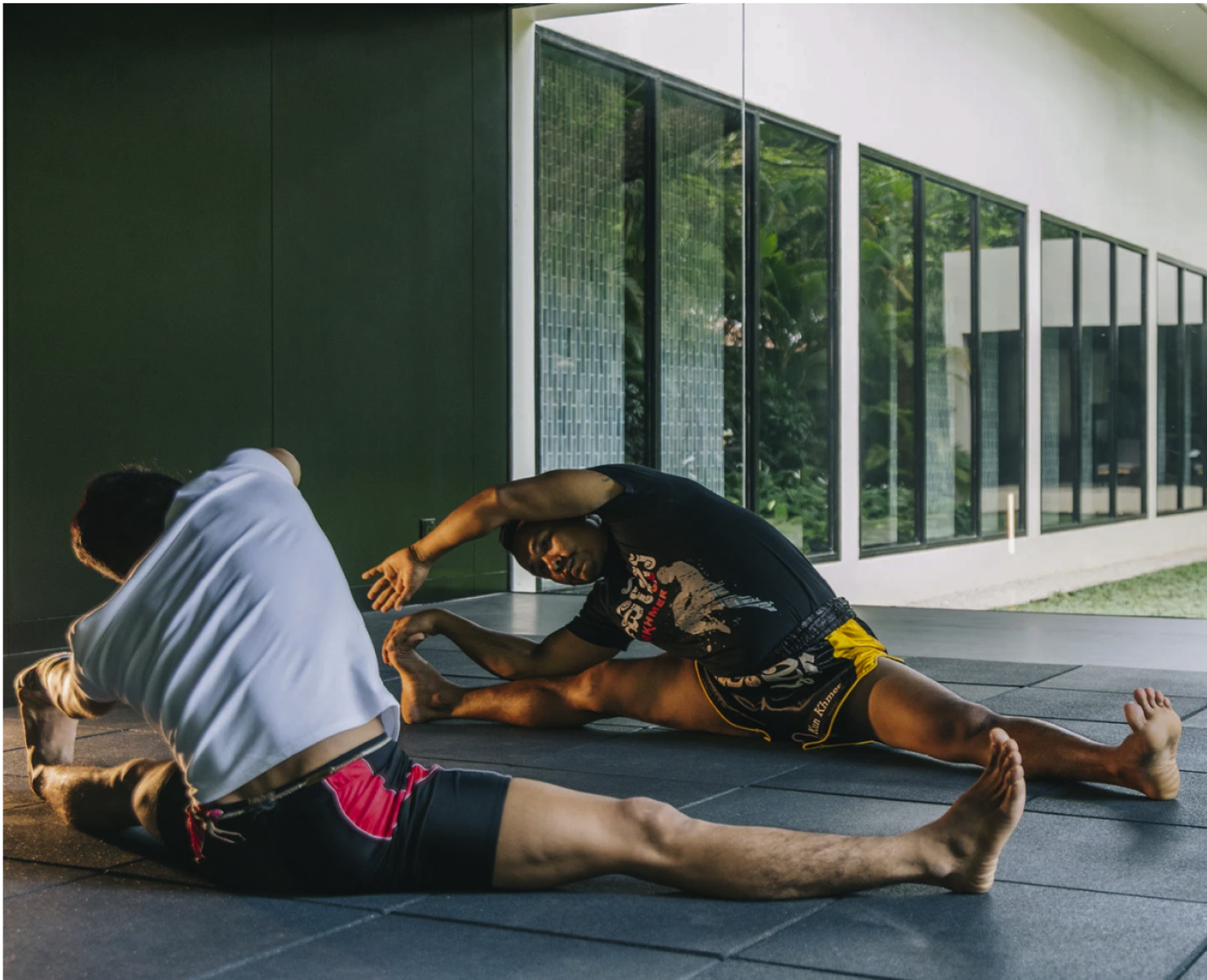
One practical caveat: cold muscles are not ready for maximal effort. After plunging, warm yourself back up naturally — stretch and do light movement for 10 to 15 minutes as you adjust, then go into your working sets. You’ll notice more power, endurance, and energy through the session.
What Does a Morning Cold Plunge Do for Alertness?
A 2–3 minute morning plunge produces a rapid rise in norepinephrine and dopamine that most people experience as several hours of clean, jitter-free alertness — which is why the morning slot is the most popular plunge time even among people who train in the evening.
Used this way, the plunge isn’t a recovery tool at all. It’s a state tool:
- It front-loads the hardest part of the day. Doing a genuinely difficult thing before 7 a.m. changes how the rest of the day’s friction feels. This compounding psychological effect is the one most daily plungers say they’d miss most.
- It replaces the second coffee, not the first workout. The catecholamine rise from cold is long-lasting and doesn’t come with caffeine’s afternoon crash or sleep interference.
- It separates cleanly from training. A 6 a.m. plunge and a 6 p.m. lift puts a full 12 hours between cold and the anabolic window — the cleanest possible timing if hypertrophy is your goal.
If mornings are your plunge slot, temperature matters less than showing up daily — see our full guide to cold plunge temperature and time for the progression.
Does Plunging Before Training Hurt Strength or Skill Work?
Only if you walk from the water straight to the bar. Cold slows muscle contraction speed and blunts fine motor control temporarily — both recover as you rewarm.
Practical rules for plunging as a pre-workout:
- Give it 10–15 minutes of light movement between the plunge and your first working set. Walking, mobility work, and warm-up sets do the job; a hot shower defeats some of the adaptive purpose.
- Protect skill-heavy and max-effort work. If the session is heavy singles, Olympic lifts, or anything requiring precise bar feel or grip, extend the rewarming window — cold hands are the last thing to come back.
- Keep pre-workout plunges short. 2–3 minutes is plenty for the alertness effect. A 10-minute soak before training drops core temperature enough to work against you.
How Should You Schedule It? Three Common Scenarios
Morning lifter: plunge on waking, rewarm 10–15 minutes with mobility and warm-up sets, lift, sauna after if available. Cold and lifting are separated by minutes on the front side, which is fine — the blunting concern is about cold after the lifting stimulus, not before.
Evening lifter: plunge in the morning for the alertness benefit, lift after work, sauna after the lift. This is the cleanest arrangement of all — roughly 12 hours between cold and the post-lift adaptation window.
Endurance athlete in a heavy block or race week: plunge after sessions when next-day freshness is the priority; skip the plunge after your one or two key adaptation workouts of the week. During tournaments or stage events, plunge freely — recovery outranks adaptation until the event is over.
Whichever scenario fits you, hold the schedule for at least four weeks before judging it. Timing effects are real but subtle — consistency is what makes them visible.
What Is the Best Daily Cold Plunge, Workout, and Sauna Routine?
Cold plunge first, then train, then sauna. This ordering gets you the alertness benefits of cold when they help most, keeps cold away from the post-lift anabolic window, and uses heat when it amplifies rather than fights your training:
- Cold plunge first. 2–3 minutes at your working temperature. (Not sure what that is? See our guide to cold plunge temperature and time.)
- Then workout. After 10–15 minutes of natural rewarming and light movement.
- Sauna post-workout. Heat after training supports growth-factor signalling and delivers a relaxation response. Sauna also pairs well with the end of the day: the cool-down after heat is biologically associated with sleep onset. If you struggle to sleep, try an evening sauna.
Cold Plunge Workout Plan: A Sample Weekly Schedule
Use this cold plunge workout plan as a template, then adjust it to your own training split. It follows one rule set: keep cold away from the 4–6 hour anabolic window after heavy lifting, use morning or pre-workout plunges for alertness, plunge after endurance work to cut soreness, and save one full contrast session (plunge + sauna) for the weekend.
| Day | Training focus | When to cold plunge | Why |
|---|---|---|---|
| Monday | Heavy lower-body strength | Morning, or pre-workout | Alertness before training; keeps cold out of the post-lift growth window |
| Tuesday | Endurance / conditioning | After your session | Post-endurance plunging reduces soreness without blunting strength gains |
| Wednesday | Upper-body hypertrophy | Morning (not within 4–6 hrs after lifting) | Protects the muscle-growth response you just triggered |
| Thursday | Rest / mobility | Anytime — morning is ideal | Recovery and mood, with no training to interfere with |
| Friday | Full-body strength | Morning, or pre-workout | Same rule as Monday — cold before, not right after |
| Saturday | Conditioning + contrast therapy | After training: plunge, then sauna | Your once-a-week full contrast session (see below) |
| Sunday | Rest | Optional short morning plunge | Light hormetic stress; skip it if you’re run down |
Two non-negotiables make any cold plunge workout plan work: never plunge in the 4–6 hours right after a hypertrophy session, and dial in your temperature and time first — see our guide to cold plunge temperature and time. Everything else flexes around your week.
What About Weekly Contrast Therapy?
Once a week, on an active recovery day, run a full contrast session: 3 rounds of cold plunge and sauna, back to back.
- Protocol: Cold plunge 2–3 minutes, then sauna 15–20 minutes — repeat for 3 rounds
- Total time: 1 to 1.5 hours
- Cold plunge temp: below 59°F (15°C)
- Sauna temp: above 180°F (82°C)
Small studies of repeated sauna exposure have measured very large acute spikes in growth hormone — in one protocol, on the order of 16-fold — though levels return to baseline and the long-term significance is still being studied. Treat contrast therapy as a powerful recovery and resilience session, not a magic anabolic trick.
Full contrast therapy also has diminishing returns: running it more than about once per week adds little, and it’s hard to protect a 90-minute block daily anyway. Daily short plunges plus one weekly contrast session is the combination that maximizes hormetic stress without eating your schedule.
Why Does Timing Matter at All? The Hormetic Stress Picture
Cold plunging, working out, and sauna are all hormetic stresses — useful stressors that force your metabolism, nervous system, and hormonal systems to adapt. There are four big ones:
- Exercise
- Fasting
- Heat (sauna)
- Cold (plunge)
Because they all pull on the same adaptation machinery, when you stack them changes what you get. Cold immediately after lifting mutes the lifting signal. Cold before training amplifies readiness. Heat after training complements it. That’s the whole timing game.
Start slowly. It’s difficult to install several new routines at once — stack these practices gradually, and favor daily consistency over heroic sessions. A one-minute plunge every day beats a fifteen-minute plunge once in a blue moon.
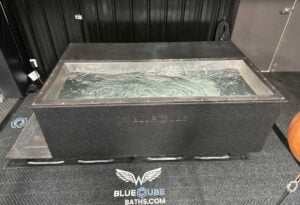
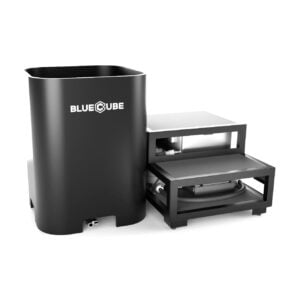
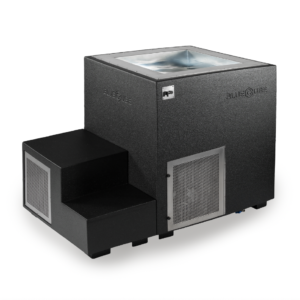
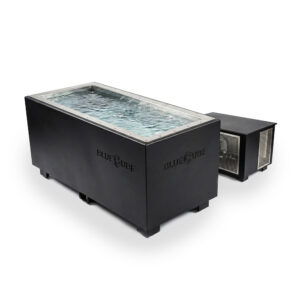
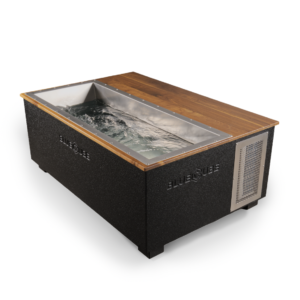
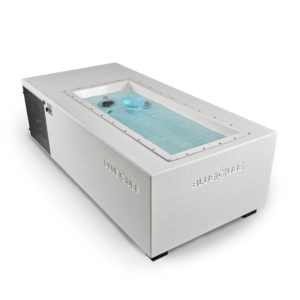
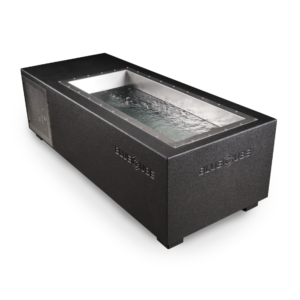
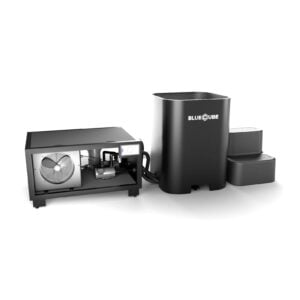
One equipment note that changes the experience: in a tub with strong water circulation — like the RiverMode™Plus system on the BlueCube D2 stand-up plunge and C2 — moving water strips away the warm boundary layer your body builds, so a 2–3 minute pre-workout plunge delivers a full dose fast. And if you’re comparing tubs, read what review sites won’t tell you about “best cold plunge” lists first.
Cold Plunge Before or After Workout: Frequently Asked Questions
Should I cold plunge before or after my workout?
For muscle growth: before your workout, or several hours after lifting. For endurance recovery and multi-day events: after training is fine. For energy and focus: mornings or pre-workout, with 10–15 minutes of rewarming before hard efforts.
Does cold plunging after lifting kill your gains?
“Kill” is too strong — but research suggests cold-water immersion immediately after strength training attenuates the anabolic signalling and long-term muscle and strength gains compared with active recovery. If hypertrophy is your goal, keep cold water 4–6+ hours away from lifting.
How long after lifting should I wait to cold plunge?
A common evidence-informed rule is at least 4–6 hours. A morning lift and an evening plunge is a clean separation that keeps both benefits intact.
Should runners and cyclists cold plunge after training?
Yes — post-session plunging can reduce perceived soreness and helps back up hard days, which is why it’s a staple at tournaments and stage events. Consider skipping it after your biggest adaptation-focused sessions of the week.
Is a cold plunge a good pre-workout?
Excellent — the rise in dopamine and norepinephrine leaves you alert and driven for hours. Just rewarm naturally with 10–15 minutes of light movement before maximal work, since cold muscles aren’t ready for peak output.
Should I cold plunge on rest days?
Rest days are ideal — there’s no training signal to interfere with. It’s also the best day for a full 3-round contrast therapy session (cold plunge + sauna).
Cold plunge and sauna on the same day — which order?
On training days: plunge before training, sauna after. In a dedicated contrast session: alternate cold to hot for 3 rounds. Many practitioners end contrast sessions on cold; end on heat if sleep is the priority that night.