For most people, the sweet spot is 50–59°F for 2–5 minutes. Beginners should start at 55–60°F for 1–2 minutes; experienced plungers work down toward 37–45°F. Research suggests roughly 11 minutes of total cold immersion per week, split across 2–4 sessions, is enough to trigger measurable metabolic benefits — you do not need to go colder or longer than that to get results.
This guide covers the right temperature and duration by goal, how to progress safely, what changes for women, and why moving water changes the math entirely.
How Cold Should a Cold Plunge Be?
Cold enough to feel uncomfortably cold — but safe. For most goals that means water between 50 and 59°F.
A cold plunge is generally defined as submerging your body up to your neck in water below 59°F (15°C). That definition largely comes from the winter-swimmer research of Dr. Susanna Soeberg, whose peer-reviewed study you can read here: Dr. Susanna Soeberg — Cell Reports Medicine.
There is also evidence that immersion at even warmer temperatures, as high as 68°F, can produce beneficial adaptive responses:
Short-Term Head-Out Whole-Body Cold-Water Immersion
The most useful rule of thumb comes from Dr. Andrew Huberman: the water should be uncomfortably cold, yet safe to stay in. For one person that is 58°F. For a cold-adapted athlete it might be 39°F. Your cold tolerance — not someone else’s Instagram video — sets your number.
And when Dr. Soeberg is asked what temperature is best, her answer is: “The perfect temperature is simply to keep changing it.” Varying temperature and duration keeps your body adapting, the same way changing weights, sets, and reps does in the gym.
Is an Ice Bath Temperature Different From a Cold Plunge Temperature?
In everyday use the terms overlap, but they point at different doses. “Ice bath” traditionally means water at or near freezing — roughly 32–40°F, often with actual ice. “Cold plunge” covers the whole controlled range below 59°F.
The distinction matters for two practical reasons:
- Dose and risk scale together. A 38°F ice bath delivers in 90 seconds what a 55°F plunge delivers in several minutes — and it punishes mistakes far faster. Most of the published research on mood, metabolism, and recovery was conducted in the 50–68°F range, not in near-freezing water. You do not need ice-bath temperatures to get the studied benefits.
- Equipment determines consistency. A bag-of-ice bath in a stock tank drifts warmer from the moment you fill it, so your “ice bath temperature” is really a moving target. A chilled system holds its setpoint session after session, which is what lets you actually run a progression — the same reason you use plates instead of rocks in the gym.
If someone asks “how cold is an ice bath supposed to be?” — the honest answer is: colder than most people need. Start with cold plunge temperatures (50–60°F), earn your way down, and treat the 30s as an advanced tool rather than the definition of doing it right.
What Cold Plunge Temperature Should You Use for Your Goal?
Recovery calls for moderate cold and more time; alertness and mood need only short, brisk sessions; cold adaptation is where colder water earns its keep. Use this as a starting map, then adjust to your tolerance:
| Goal | Water temperature | Time per session | Notes |
|---|---|---|---|
| Muscle recovery / soreness | 50–59°F | 5–10 minutes | Timing matters: if muscle growth is the goal, research suggests keeping cold immersion several hours away from lifting — see cold plunge before or after workout |
| Mood, dopamine & alertness | 50–59°F | 2–5 minutes | Short morning sessions work well; the alerting effect lasts hours |
| Cold adaptation / metabolic health | 41–50°F | 1–3 minutes | Work toward ~11 minutes total per week across 2–4 sessions |
| First-timers (any goal) | 55–60°F | 1–2 minutes | Stairstep down in temperature and up in time as tolerance builds |
Do not treat cold exposure as a competition. It is a tool for building insight, resilience, and adaptation. Some people naturally have high cold tolerance; others naturally run low. Both get benefits.
How Long Should You Stay in a Cold Plunge?
Long enough to get past the initial shock and settle your breathing — typically 1–2 minutes for beginners and 2–5 minutes for most regular plungers. About 11 minutes per week of total immersion is a well-supported target.
Dr. Soeberg’s research on winter swimmers found that 59°F water — two to four sessions per week, roughly 11 minutes of total time in the water — was enough to cause a measurable metabolic boost. More is not required, and much more may just add stress without adding benefit.
Here is a progression matrix that mirrors how we coach new BlueCube owners:
| Level | Temperature | Duration | Frequency |
|---|---|---|---|
| Beginner (weeks 1–4) | 55–60°F | 1–2 minutes | 2–3× per week |
| Intermediate | 45–55°F | 2–4 minutes | 3–4× per week |
| Advanced | 37–45°F | 2–5 minutes | Up to daily |
Three practical rules regardless of level:
- Get your breathing under control first. The first 20–30 seconds trigger the cold-shock response — rapid breathing and an urge to gasp. Slow, deliberate exhales bring it down. The session really starts once your breath settles.
- Exit on shivering that won’t stop. Persistent, uncontrollable shivering means you’re done for the day.
- End cold if you want the metabolic effect. Letting your body reheat itself (rather than jumping straight into a hot shower) extends the adaptive stimulus.
What Is the Ideal Cold Plunge Temperature for Women?
The same goal-based ranges apply, but many women do better starting at the warmer end — 55–60°F — and adjusting session length with their cycle rather than chasing colder numbers.
Two physiological realities are worth knowing:
- Cooling rate differs by body composition. People with a higher surface-area-to-mass ratio and less muscle mass cool faster in the same water. Many women reach the “uncomfortably cold but safe” point at a warmer temperature or a shorter duration than a larger training partner — that is not weaker tolerance, it’s physics. Use your own response, not someone else’s settings.
- The menstrual cycle shifts thermal baseline. Core temperature runs roughly 0.5–1°F higher during the luteal phase (after ovulation), and many women report cold feeling noticeably harsher in the days before a period. It is reasonable to shorten sessions or warm the water a few degrees during that window and go colder in the follicular phase if it feels right.
One honest caveat: much of the foundational cold-immersion research — including the winter-swimmer metabolic studies — was conducted primarily on men. Women-specific data is thinner, which is exactly why we recommend women anchor on the “uncomfortably cold yet safe” rule and progress conservatively rather than copying protocols built around male subjects.
Pregnant women, and anyone with cardiovascular conditions, should talk to a physician before any cold immersion practice.
Why Cold Plunge Up to the Neck?
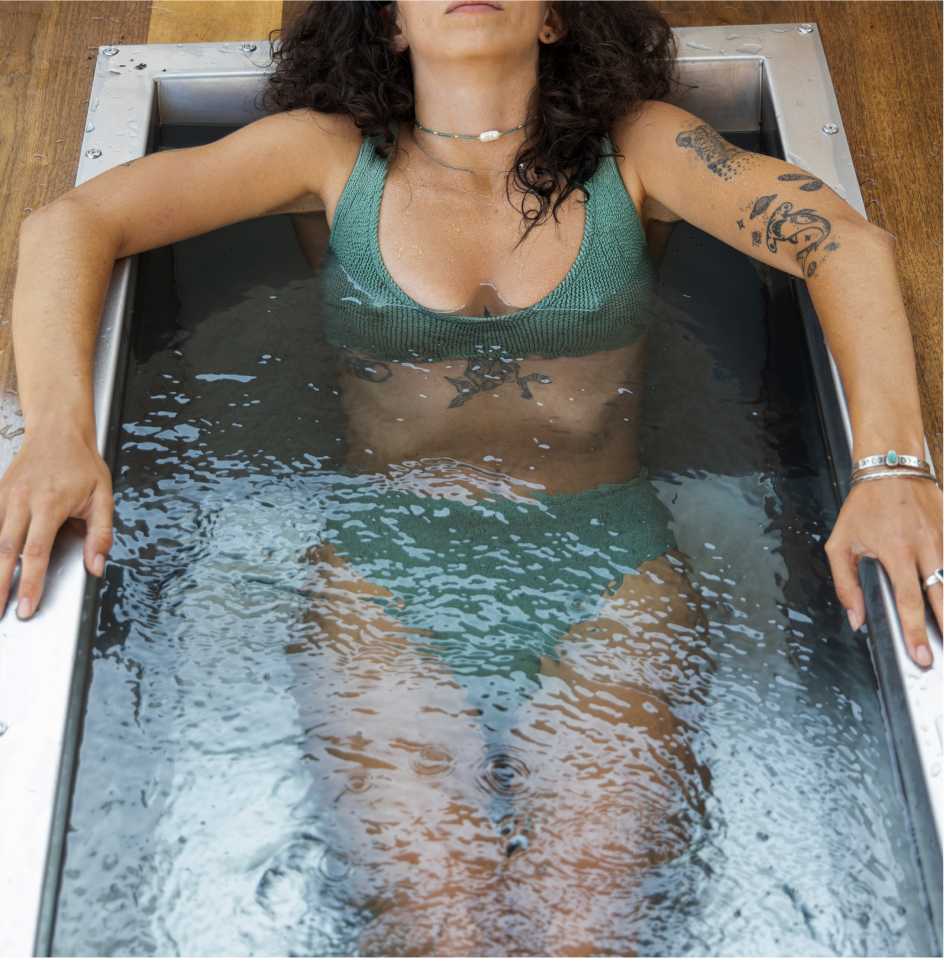
Because dose scales with submerged surface area. Cold plunging up to the neck, fully submerged, delivers a significantly higher dose of cold exposure than a cold shower or partial soak.
If you have the opportunity, test it yourself: feel the difference between submerging to your chin versus your shoulders, and between keeping your arms in the water versus resting them outside. You will notice a real jump in intensity with neck and arms submerged.
You can also experiment with dunking your head briefly at the start or end of a session — it adds another adaptation stimulus. Never dunk while alone.
Does Moving Water Change How Cold It Feels?
Dramatically. Still water lets your body build a thin warm boundary layer against your skin; moving water strips it away continuously, so the same temperature pulls heat from your body much faster.
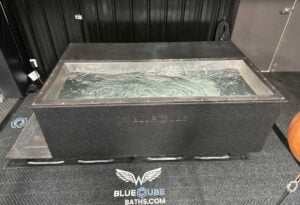
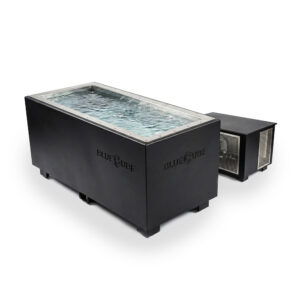
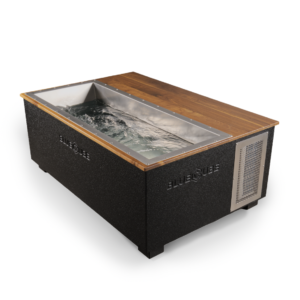
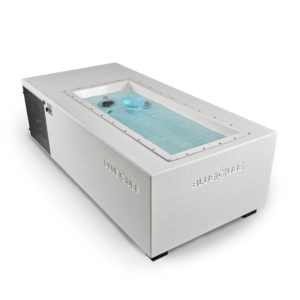
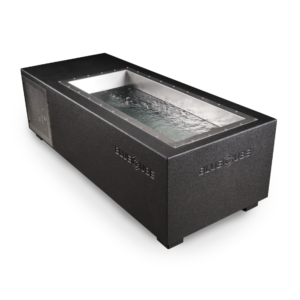
This is why comparing plunge temperatures across tubs can mislead. A tub with strong circulation at 45°F can feel harder than still water in the high 30s. It is the principle behind BlueCube’s RiverMode™ (single pump) and RiverMode™Plus (two pumps, each moving 25.6 gallons per minute) — the water never lets you settle in.
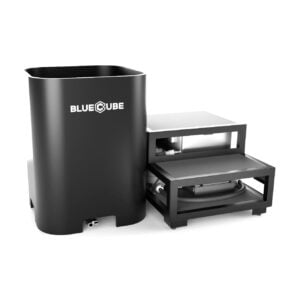
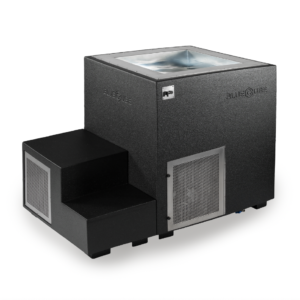
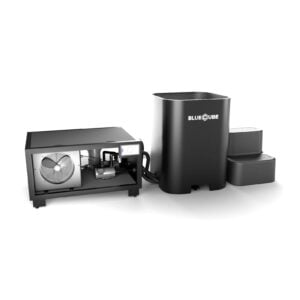
On the equipment side: Balboa-chilled BlueCube models like the D1 stand-up plunge and the C2 hold any temperature from 41°F to 104°F, and the C3 holds temperatures down to 34°F for cold-adapted users. If you’re comparing equipment, our guide to what review sites won’t tell you about “best cold plunge” lists covers what actually matters.
Are There Benefits to Going Colder?
Colder is a faster, stronger dose — not a requirement. Think of colder temperatures like lifting heavier weights. Do you have to lift heavier to benefit from resistance training? No. Will you drive more adaptation if you progressively can? Likely yes — provided you’ve built the tolerance to handle it.
Anecdotally, experienced plungers report that colder water “resets” the nervous system faster. But peer-reviewed evidence comparing very cold (below ~40°F) to moderate cold water is still limited, so treat colder-is-better claims as unproven.
The risk side is real: with heavier lifting you risk joints and connective tissue; with hotter saunas, heat stroke and dehydration; with colder water, hypothermia — and it can develop quickly. Respect the progression.
You Can Always Cold Plunge Longer at Warmer Temperatures
An alternative to going colder is going longer at warmer temperatures — akin to doing more repetitions with lighter weight. The benefits are still substantial, and the risk of a bad session drops. A 10-minute soak at 58°F is a legitimate cold plunge.
Forget Intensity, Focus on Consistency
Where most people stumble is thinking they have to go intense right out of the gate. They see people on Instagram in near-freezing water. Forget all that.
The question to ask: how can you integrate cold exposure into your life on a daily or weekly basis? No single session defines you. As with exercise, build a routine that is scalable. It is far more valuable to plunge every day for one minute than to plunge once in a blue moon for fifteen.
Exercise, cold exposure, heat exposure (sauna), and intermittent fasting are all hormetic stressors — useful stresses that reset metabolism, nervous system, and hormonal balance. All of them reward consistency and variation over heroics.
Is Cold Plunging Safe? What Are the Risks?
For healthy adults using sane temperatures and durations, cold plunging is low-risk — but the risks that exist are serious and worth naming.
- Cold-shock response. Sudden immersion triggers involuntary gasping and rapid heart rate for the first seconds. Enter deliberately, exhale slowly, and never jump in headfirst.
- Cardiovascular strain. Cold immersion sharply raises blood pressure and heart rate. Anyone with heart disease, arrhythmia, or uncontrolled hypertension should get physician clearance first.
- Hypothermia. It can arrive faster than expected, especially in water below 40°F. Uncontrollable shivering, clumsiness, or confusion mean get out and rewarm immediately.
- Never plunge alone at extreme temperatures, never after alcohol, and never dunk your head while solo.
- Afterdrop. Your core temperature keeps falling for several minutes after you exit. Have a plan to rewarm — dry clothes, movement, warm environment.
- Know your setup. Keep entry and exit points clear of ice and standing water, and know exactly how long your session has run — a visible timer or a topside display beats guessing.
Cold Plunge Temperature and Time: Frequently Asked Questions
How cold should a cold plunge be for beginners?
Start at 55–60°F for 1–2 minutes. That is cold enough to trigger the adaptive response while you learn to control your breathing. Lower the temperature and extend the time gradually over weeks, not days.
What is the best cold plunge temperature?
There is no single best temperature. For most goals, 50–59°F is the working range; cold-adapted users go into the low 40s and below. Dr. Susanna Soeberg’s advice: “The perfect temperature is simply to keep changing it.”
How long should you stay in an ice bath?
Typical sessions run 2–5 minutes. Research suggests about 11 minutes of total immersion per week, split across 2–4 sessions, is enough for measurable metabolic benefit. Exit any session if shivering becomes uncontrollable.
Is 60°F cold enough for a cold plunge?
Yes. Below 59°F is the standard research definition of cold-water immersion, and studies have found beneficial adaptive responses at temperatures as warm as 68°F. If 60°F feels uncomfortably cold to you, it is doing its job.
What temperature should women cold plunge at?
The same goal-based ranges apply — most women do well starting at 55–60°F and progressing by feel. Core temperature runs slightly higher during the luteal phase of the menstrual cycle, so cold can feel harsher in the days before a period; shortening sessions or warming the water a few degrees during that window is a reasonable adjustment.
Is 34°F too cold for a cold plunge?
For beginners, yes. Water in the mid-30s is an advanced dose with a fast path to hypothermia if you overstay. Cold-adapted users work down to it gradually with short sessions. Among BlueCube tubs, the C3 is the model built to hold temperatures that low.
Does a colder plunge give better results?
Not automatically. Colder is a faster, stronger dose, but consistency beats intensity, and evidence directly comparing very cold to moderate temperatures is limited. You can get comparable benefit by staying longer at warmer temperatures.
Can you cold plunge every day?
Most healthy adults can plunge daily at moderate temperatures for 2–5 minutes. If your priority is muscle growth, keep cold sessions several hours away from strength training — see our guide on cold plunging before or after a workout.