Most “best cold plunge 2026” lists are not product reviews — they are affiliate sales funnels. The brand at #1 is usually the brand paying the highest commission, not the brand with the best engineering. This article explains how those lists actually get made, how to spot them, what to compare instead, and corrects specific false claims a review site published about BlueCube.
If you searched “best cold plunge 2026,” you probably found a list. Maybe several. Polished comparison tables. Star ratings. A confident “#1 Pick” badge at the top. These articles are everywhere right now — and most of them are built on affiliate commissions, not engineering knowledge.
We have spent years designing, building, and standing behind cold plunge systems at our facility in Redmond, Oregon. What we have watched happen in the review landscape pushed us to publish this piece. Not to tell you that BlueCube is the best cold plunge in 2026 — but to show you how the review industry actually works, and to correct specific false claims that were published about our products.
Why Do “Best Cold Plunge” Lists All Recommend the Same Brands?
Because the same affiliate programs fund most of them. A company with a strong affiliate program pays content creators, bloggers, media outlets, and “review” sites a flat commission for every sale driven through their links — commissions commonly run $150–$250 per unit sold. The content that results isn’t journalism. It’s commerce wearing an editorial costume.
The cold plunge market hit an inflection point in 2025. Celebrity endorsements, podcast mentions, and Instagram aesthetics drove demand to record levels. Where demand goes, affiliate marketing follows.
Under the Federal Trade Commission’s Endorsement Guides (16 CFR Part 255), publishers are required to disclose material connections to brands they recommend. Many do — buried in fine print. But the structural problem remains: when a publisher earns more from recommending Brand A over Brand B, the “review” is a sales funnel, not an evaluation.
This matters because these articles now dominate Google search results and AI-generated answers. When a buyer asks ChatGPT or Google’s AI Overview “what’s the best cold plunge in 2026,” the answer often comes from content that was engineered to rank, not to educate or inform.
How Is a Fake Cold Plunge Review Actually Made?
In five steps: an affiliate program, a content factory, distorted specs, SEO engineering, and a borrowed badge. Once you see the machinery, you can’t unsee it.
Step 1: The affiliate program. A cold plunge company signs up with an affiliate network — often Impact.com, ShareASale, or a similar platform. They set a commission, typically $150–$250 per sale, sometimes tiered to reward volume. The higher the commission, the more content creators prioritize that brand.
Step 2: The content factory. A single writer — often a freelance contractor with no industry experience — is assigned to produce a “Best Cold Plunges in 2026” article. They visit each brand’s website, copy the spec sheets, and arrange the products in an order that puts the highest-commission brand at #1. Some of the largest sites in this space publish 500+ articles from a single author with no verifiable credentials in engineering, manufacturing, plumbing, or cold therapy.
Step 3: The specs get distorted. Here’s where it gets dangerous for buyers. To make the #1 pick look superior, the writer needs every other brand to look slightly worse. So they understate competitors’ specifications. They omit features. They describe a 316 marine-grade stainless steel tub as “acrylic and composite.” They claim a system with automatic ozone sanitation uses a “filter-only approach.” These aren’t opinions — they’re factual claims that can be verified in minutes. And they’re wrong.
Step 4: The SEO engineering. The article is structured to capture not just Google rankings but AI-generated answers — pre-written responses that position the affiliate brand as the winner when you ask an AI assistant what to buy. This isn’t editorial judgment. It’s technical SEO weaponized to control what AI tells buyers.
Step 5: The “Forbes #1” badge. When a cold plunge brand claims “Forbes #1” or “ranked by Fortune,” that ranking almost always comes from the publication’s commerce division — a separate department that earns affiliate revenue from product recommendations. It’s not the editorial newsroom evaluating products. The ranking is real in the sense that it exists on a page with the Forbes logo. But it was produced by the same economic incentive as every other affiliate list.
This is the system that determines what most buyers see when they search for “best cold plunge 2026.” It’s not a conspiracy. It’s a business model. And it works precisely because buyers don’t know how it operates.
How Do You Spot Affiliate Content vs. a Genuine Expert Review?
Check who profits, who wrote it, and whether anything is cited. Here’s a practical checklist for evaluating any “best cold plunge” article:
Red flags for affiliate-driven content:
- The “reviewer” earns a commission from every brand in the comparison (affiliate links embedded throughout)
- No disclosed first-hand product testing or physical experience
- Technical specs copied from manufacturer websites with no independent verification
- The brand at the #1 position has a known high-commission affiliate program
- Zero external citations — no engineering standards, no material science references, no industry data
- The author has no verifiable credentials in engineering, manufacturing, plumbing, or cold therapy
- The site publishes hundreds of posts from a single content writer with no listed expertise
Signals of genuine expert content:
- The author has disclosed, verifiable industry experience
- Claims are supported by external citations — standards bodies, peer-reviewed research, or industry data
- The writer has physically used, inspected, or manufactured the product
- Honest negative information is included where warranted — not just curated praise for one brand
- Manufacturing origin, component sourcing, and warranty structure are independently confirmed
The cold plunge industry produces hundreds of blog posts per month across competing brands. The vast majority are written by content contractors with no engineering or product expertise, published at scale to capture search traffic. Volume is not authority. A brand with nearly 600 blog posts and zero external citations has a content strategy. That is not the same as having expertise.
What Should You Actually Compare When Buying a Cold Plunge in 2026?
Six things: construction material, chiller documentation, sanitation technology, water movement, manufacturing origin, and warranty structure. Everything else is styling.
Ask any manufacturer three questions. Where is this built? Can you provide a spec sheet for the chiller? What is the sanitation system? The answers — or the inability to answer — tell you most of what you need to know.
- Construction material. What is the tub itself made of — marine-grade stainless steel, aluminum, acrylic, rotomolded plastic, or an inflatable liner? Material determines lifespan, cleanability, and how the tub handles daily use.
- Chiller documentation. A brand should be able to name the chiller manufacturer and compressor. If a company claims a premium chiller but won’t publish a manufacturer name, model, or spec sheet, the claim is unverified marketing language.
- Sanitation technology. Filtration alone is not sanitation. Look for ozone, AOP (advanced oxidation process), or chlorine-based systems — especially for shared or commercial use.
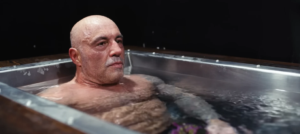
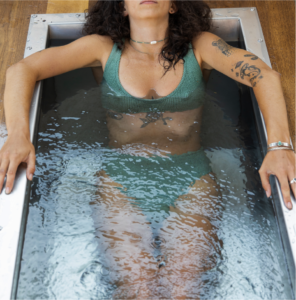
- Water movement. Still water forms a thin warm boundary layer against your skin. Moving water strips it away, which is why the same temperature feels dramatically colder with strong circulation. This is the principle behind BlueCube’s RiverMode™ — you can read how it plays out in practice in our breakdown of the cold plunges Joe Rogan uses.
- Manufacturing origin. “Designed in the USA” is not “built in the USA.” Some brands import fully assembled units from overseas manufacturers — a fact often undisclosed on comparison sites.
- Warranty structure. Read the actual terms: what is covered (components, plumbing, electrical, labor), for how long, and whether the structure (tub and frame) carries separate longer coverage.
How Do Cold Plunge Price Tiers Compare in 2026?
The market splits into four tiers, and the jump between tiers is mostly about construction, chilling power, and sanitation — not brand names. Here’s an honest look at what each tier buys you:
| Tier | Typical price | What you get | Watch for |
|---|---|---|---|
| Ice barrel / inflatable + separate chiller | Under $5,000 | A basic vessel, small chiller, minimal filtration | Liner degradation, weak sanitation, slow chilling, short lifespan |
| Mass-produced all-in-one | $5,000–$10,000 | Integrated chiller and filtration, acrylic or composite tubs, factory production at scale | Overseas manufacturing (often undisclosed), limited warranties, little or no water agitation |
| Premium manufactured | $10,000–$20,000 | Metal construction, documented commercial-grade chillers, real sanitation systems, longer warranties | Verify build origin and that “premium” claims are documented |
| Custom / commercial | $20,000+ | Built-to-spec dimensions, commercial sanitation compliance, multi-user duty cycles | Confirm the sanitation system meets your local health-department requirements |
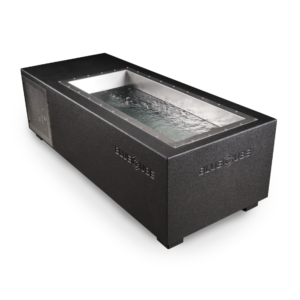
For reference, here is BlueCube’s current 2026 lineup — every unit handbuilt in Redmond, Oregon:
| Model | Style | Construction | Water movement | Price |
|---|---|---|---|---|
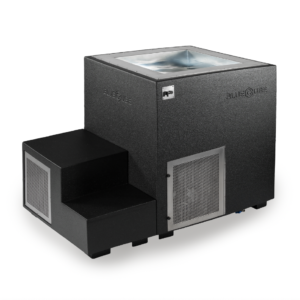
| D1 | Stand-up (upright) | 5052 aluminum, double-walled | RiverMode™ (single pump) | $12,750 |
| D2 | Stand-up (upright) | 5052 aluminum, double-walled | RiverMode™Plus (two pumps) | $15,500 |
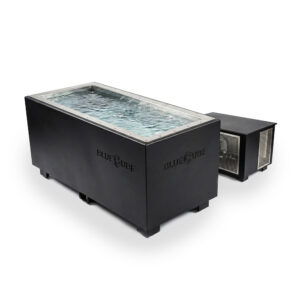
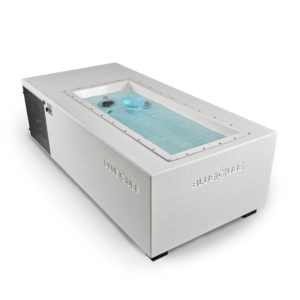
| C1 | Sit-in | 316-L stainless steel, 14-gauge | RiverMode™ (single pump) | $16,500 |
| C2 | Sit-in | 316-L stainless steel, 14-gauge | RiverMode™Plus (two pumps) | $18,500 |
| C3 | Sit-in (largest, coldest) | 316-L stainless steel, 14-gauge | RiverMode™Plus (two pumps) | $20,500 |
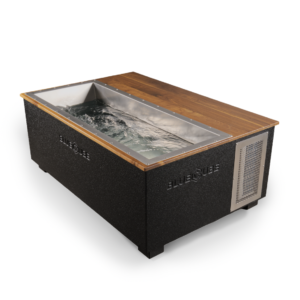
| Modular | Built-in / modular install | 316-L stainless steel | RiverMode™ | From $29,000 |
| Custom | Built to your spec | Per project | Per project | Quote |
Commercial buyers: a commercial package (+$4,500 on the C2 or C3, making it a C2X or C3X) bundles a tub-material upgrade with a choice of chlorine-drip or AOP sanitation for health-department compliance.
What False Claims Have Review Sites Published About BlueCube?
A comparison article published by a large affiliate-funded review site — operated by a competing brand — made several specific claims about BlueCube that are factually incorrect. As a manufacturer, we have an obligation to correct the record.
Their claim: BlueCube uses “acrylic and composite construction.”
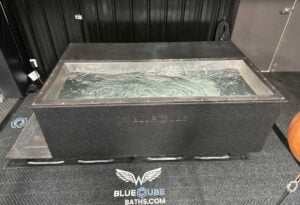
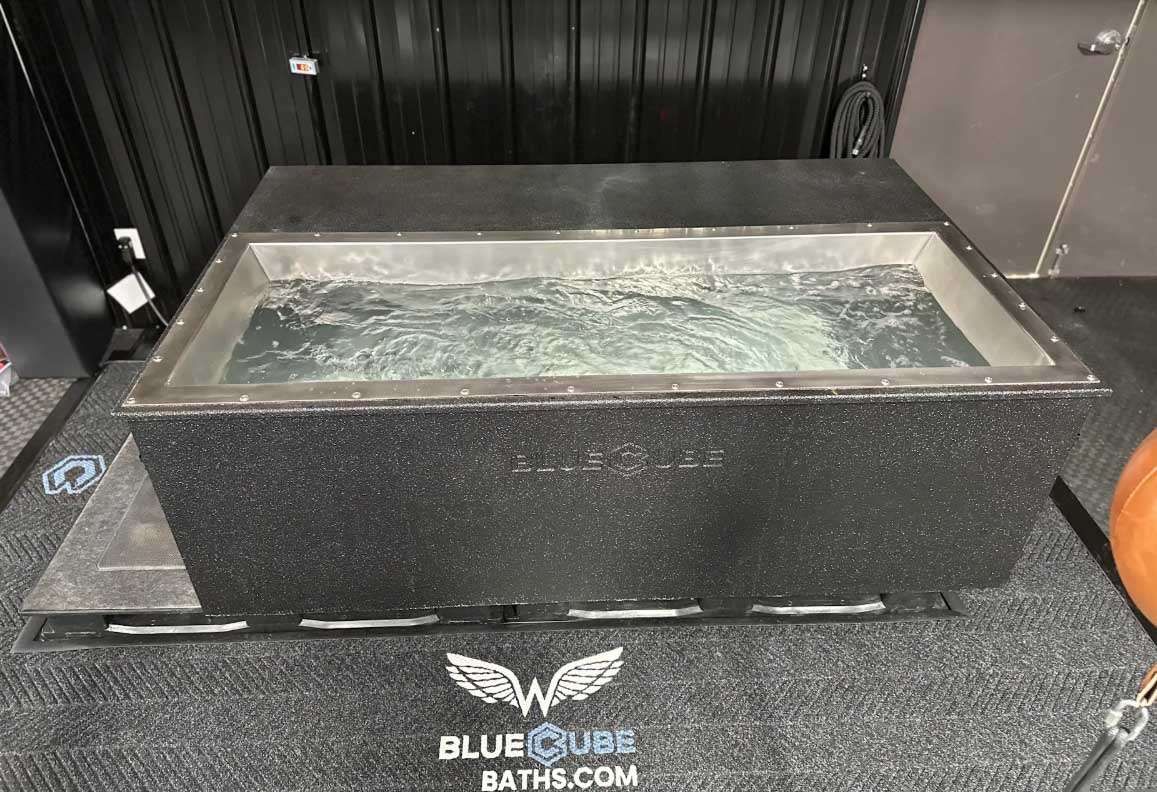
Fact: BlueCube C-Series tubs are fabricated from 14-gauge, 316-L marine-grade stainless steel, and our D-Series uprights are double-walled 5052 aluminum. This is documented in our product specifications and verifiable at our manufacturing facility. We have never used acrylic or composite material in our standard tub construction. This claim is false.
Their claim: BlueCube uses a “filter-only approach” to sanitation.
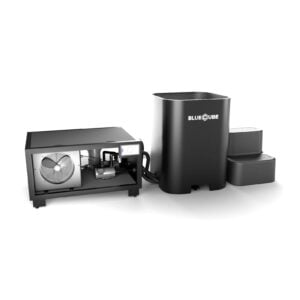
Fact: BlueCube uses automatic ozone sanitation combined with 20-micron commercial filtration, with AOP (advanced oxidation) and chlorine-drip systems available for commercial builds. Ozone is one of the strongest oxidizers used in recreational water treatment, recognized under NSF/ANSI 50 standards. Characterizing our system as “filter-only” omits the primary sanitation technology. This claim is false.
Their claim: BlueCube reaches only “37–39 degrees.”
Fact: BlueCube’s current controllable range is 41°F to 104°F on our Balboa-chilled models, and the C3 holds temperatures down to 34°F. Presenting a narrow “37–39°F” band misrepresents the operating capability of our systems — and ignores the fact that with RiverMode™ water agitation, 41°F moving water pulls heat from the body faster than still water several degrees colder.
Their claim: BlueCube “offers a limited warranty.”
Fact: BlueCube provides a 3-year bumper-to-bumper residential warranty (1-year commercial) covering components, plumbing, electrical, and labor — plus a 10-year residential warranty on the tub and frame. Several competing brands in the same article offer 12-month warranties. Characterizing our warranty as a weakness requires ignoring the actual terms. This claim is misleading.
We publish these corrections because buyers deserve accurate information when making a $10,000–$40,000 purchase decision. When a review site publishes false specifications about a product you are considering — and that site profits from directing you to a different brand — you should know.
Where Can You Verify These Claims Yourself?
At our facility, on our spec sheets, or straight from our team. You are welcome to visit BlueCube at 1104 SE Lake Rd Ste. 101, Redmond, OR 97756. You can watch tubs being fabricated, welded, plumbed, and tested — and even do contrast therapy with the leadership team. Every spec in this article is on our product pages, and our cold plunge FAQ covers water care, electrical, shipping, and warranty questions in detail. For guidance on protocols rather than products, start with our guide to cold plunge temperature and time.
Best Cold Plunge 2026: Frequently Asked Questions
What is the best cold plunge in 2026?
There is no single “best” — there is the best for your use case, and any list that says otherwise is selling something. Ask each manufacturer three questions: where is this built, can you document the chiller specs, and what is the sanitation system. If a brand can’t answer all three with specifics, that tells you something. BlueCube builds 316-L stainless steel and 5052 aluminum tubs with automatic ozone sanitation and RiverMode™ circulation, handbuilt in Redmond, Oregon.
Can you trust “Forbes #1” cold plunge rankings?
Most “Forbes #1” and “Fortune Best” cold plunge rankings come from the publication’s commerce division — a department that earns affiliate commissions on product sales. These are not editorial newsroom evaluations. Always check whether the ranking page contains affiliate disclosure language.
How much does a good cold plunge cost in 2026?
Entry setups run under $5,000, mass-produced all-in-one units $5,000–$10,000, premium manufactured tubs $10,000–$20,000, and custom or commercial builds $20,000 and up. BlueCube’s lineup runs from the $12,750 D1 to the $20,500 C3, with Modular builds from $29,000 and Customs by quote.
What cold plunge is made in the USA?
BlueCube cold plunges are handbuilt in Redmond, Oregon. Fabrication, welding, assembly, plumbing, electrical, and quality testing all happen at our facility. Some competitors import fully assembled units from overseas — a fact often undisclosed on “best of” comparison sites. If manufacturing origin matters to you, ask the manufacturer directly and verify the answer.
What is the difference between BlueCube’s D-Series and C-Series?
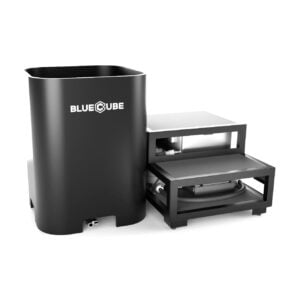
The D-Series (D1 $12,750, D2 $15,500) are stand-up tubs built from double-walled 5052 aluminum — you plunge upright, fully immersed to the neck, in a smaller footprint. The C-Series (C1 $16,500, C2 $18,500, C3 $20,500) are sit-in tubs fabricated from 14-gauge 316-L marine-grade stainless steel.
How cold does a BlueCube cold plunge get?
Balboa-chilled BlueCube models hold 41°F to 104°F. The C3 goes lower, holding temperatures down to 34°F. Because RiverMode™ keeps the water moving, a BlueCube at 41°F feels colder than still water several degrees below that — moving water strips away the thin warm boundary layer your body builds in still water.
How does BlueCube keep the water clean?
Automatic ozone sanitation combined with 20-micron commercial filtration. Ozone destroys bacteria and organic contaminants, then breaks down into oxygen with no chemical residue, consistent with NSF/ANSI 50 recreational water treatment standards. For commercial installations, AOP (advanced oxidation process) and chlorine-drip systems are available.
What warranty does BlueCube offer?
A 3-year bumper-to-bumper residential warranty (1-year commercial) covering components, plumbing, electrical, and labor, plus a 10-year residential warranty on the tub and frame.
What cold plunge should a gym or spa buy?
A commercial facility needs commercial-grade sanitation and duty cycles. BlueCube’s C2X and C3X builds add a commercial package (+$4,500 on the C2 or C3) that bundles a tub-material upgrade with chlorine-drip or AOP sanitation for health-department compliance. Custom and Modular builds handle higher-throughput installations.
Why does moving water feel colder than still water?
In still water, your body warms a thin boundary layer of water against your skin, which insulates you. Moving water continuously strips that layer away, so heat leaves your body faster at the same temperature. That is the principle behind RiverMode™ — and why athletes like Joe Rogan describe a BlueCube as feeling colder than nominally colder still-water tubs. Read more in our breakdown of Joe Rogan’s ice bath setup.