A side-by-side buyer’s guide to the two main cold plunge styles: how each one feels, the benefits of each configuration, and how to choose the right one for your home or business.
Vertical and laydown cold plunges deliver the same cold therapy in two very different ways. Choose a vertical (upright) cold plunge if you want a natural, buoyant, full-body feel and the smallest possible footprint. Choose a laydown (ergonomic) cold plunge if you want the easiest entry and exit and the most intense, jet-driven cold against your core. Neither is objectively “better.” The right pick comes down to your space, how easy you need entry to be, the kind of cold you want, and your height.
If you’ve started shopping for a serious cold plunge, you’ve run into the same fork in the road everyone does: do you stand up in it, or lie down in it? It’s one of the single biggest decisions in the category, and most product pages won’t give you a straight comparison because they only sell one style. We build both, use both every day, and the honest truth is that each one wins for a different person. This guide breaks down exactly how they differ so you can pick with confidence.
What’s the difference between a vertical and a laydown cold plunge?
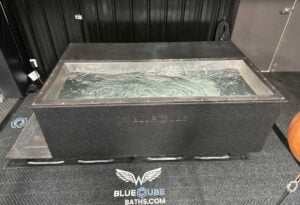
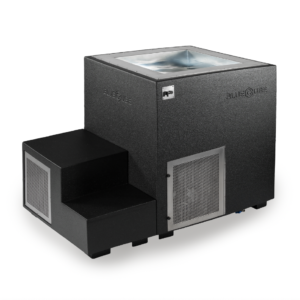
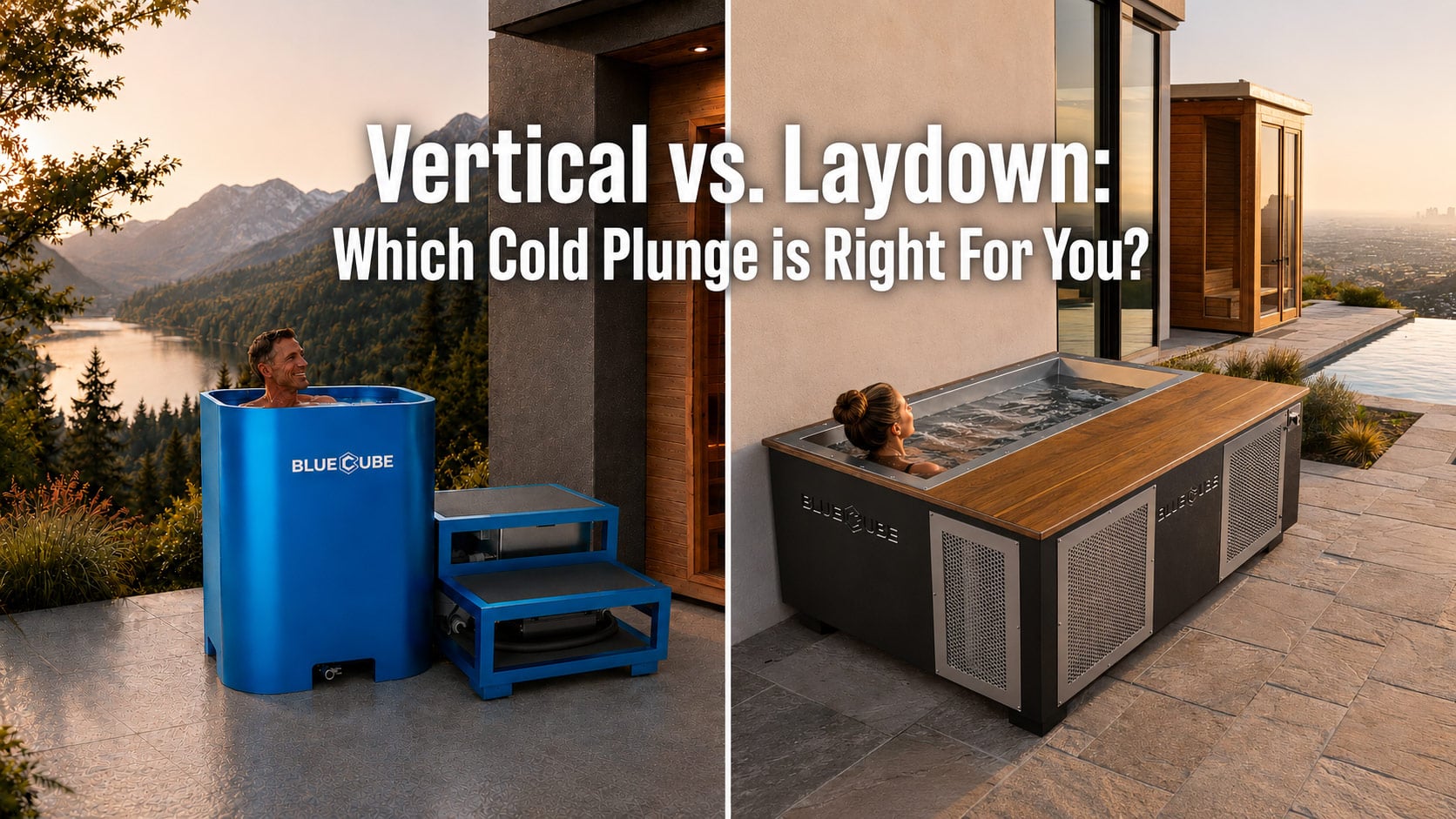
A vertical cold plunge is a deep, vertical tub you stand or crouch in — closer to wading into a lake or the ocean. A laydown cold plunge is a low-profile, horizontal tub you recline in, usually with jets aimed at your core (this is true in a BlueCube). Vertical prioritizes a natural feel and a smaller total footprint; laydown prioritizes effortless entry and maximum intensity.
The difference is entirely about body position, and everything else flows from that one choice:
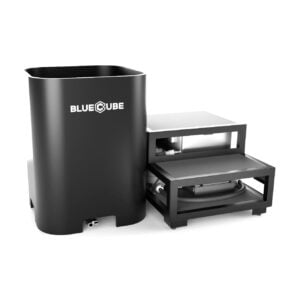
- Vertical — The basin is deep and roughly as wide as it is long. You enter from the top and immerse standing or with knees slightly bent, using the water’s buoyancy to stay comfortable. To submerge your head, you simply lower yourself down.
- Laydown (ergonomic) — The tub is long and low to the ground. You step over a low wall, sit on the edge, and recline into a near-flat position with the water reaching your neck. The whole experience is built around stillness and ease of access.
Both can fully submerge you to the neck, and both deliver the recovery benefits people chase cold exposure for. What changes is how the experience feels and who it fits best.
The vertical cold plunge experience
A vertical plunge mimics the most natural way humans encounter cold water. When you walk into the ocean, a lake, or even the shallow end of a pool, you’re standing: feet finding the bottom, body buoyant, free to move. A vertical plunge recreates that. Your weight is supported by the water, so there’s little to no pressure on your knees even with them slightly bent, and you can turn, shift, and dunk freely.
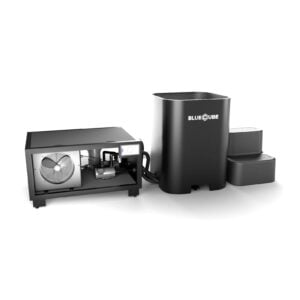
The biggest practical advantage is footprint — about 66″ × 33″ in our D-Series — which makes it the easiest serious plunge to fit in an apartment or home, a garage corner, a small patio, or tight against a wall in a commercial setting.
The “seat problem” most verticals have
Here’s the catch buyers don’t discover until they’re standing in one: most vertical plunges on the market are round and built around a molded internal seat. A circular basin with a fixed seat sounds comfortable, but it pins you into a single position and wastes the interior volume, which makes the unit feel cramped — especially if you’re tall. People who are only 5′7″ often report not being able to dunk their head or turn around in those designs.
A seatless, squircle-shaped basin (a square with rounded corners) solves this. Removing the seat and squaring off the walls maximizes usable water, lets the unit sit flush against a wall, and frees you to do a full 360, fully submerge, and actually move. It’s the difference between being constrained and being able to use the water the way your body wants to.
The trade-off
Because the basin is deep, you enter a vertical cold plunge from the top. That means a step or staircase and a bit of body-weight control to lower yourself in and climb back out. For most able-bodied users that’s a non-issue. But it’s the main reason some people prefer a laydown design.
Best for: people with limited floor space, anyone who wants the most natural “open water” feel, tall users, and those who like the freedom to move and rotate while they’re in the cold.
The laydown (ergonomic) cold plunge experience
A laydown plunge is engineered around one priority: get in, get cold, get out — with as little friction as possible. The tub sits low to the ground (around 28.5″ tall), so there’s no high step to clear and no deep knee bend required to submerge. You step over the edge, use the rim as a seated ledge, and slide back into a “set and rest” position. Most people don’t need a staircase at all.
That low, reclined posture changes the cold itself. In an ergonomic tub the jets come directly at your core while the recirculation rushes past your legs, so the cold is constantly being driven against your body instead of settling into a still layer around you. The result is a noticeably more aggressive, more “brutal” cold experience — which is exactly what a lot of serious plungers want.
Lying flat also means your fit is determined by the tub’s interior length rather than its depth. Our C-Series interiors run from about 60″ up to 72″ (with XL options), comfortably fitting users up to roughly 7′0″ in a full, head-to-neck recline.
Best for: anyone who prioritizes the easiest possible entry and exit, people with knee or mobility considerations, and plungers who want the most intense, jet-driven cold.
Vertical vs. laydown cold plunge: side-by-side comparison
| Feature | Vertical (Upright) Cold Plunge | Laydown (Ergonomic) Cold Plunge |
|---|---|---|
| Body position | Standing or squatting, buoyant | Reclined, full-body horizontal |
| Entry & exit | Enter from the top; needs a step and some body-weight control | Step over a low (~28.5″) wall and sit; usually no staircase needed |
| Footprint | Smallest — about 66″ × 33″ including stairs; sits flush to walls | Longer rectangular footprint (roughly 6–8 ft long) |
| The feel | Natural, ocean/lake-like; freedom to move and turn 360° | Spa-like recline; calm “set and rest” stillness |
| Intensity driver | Depth plus a circulating current (e.g., RiverMode); buoyancy eases the joints | Jets aimed at the core + recirculation past the legs — typically more brutal |
| Head submersion | Yes — lower yourself to dunk | Yes — recline to neck level |
| Best for tall users | Excellent — a seatless basin fits users up to ~6′5″ | Fit set by interior length (72″ can fit someone 7′0″) |
| Multiple people | Roomy solo; can fit a second smaller user | Wider and modular models add capacity; standard is solo |
| Where it fits | Flush against walls, corners, smaller floor spaces | Spaces with floor length to spare |
Specs reflect BlueCube models at the time of writing; confirm current figures on each product page.
Which cold plunge is more intense?
A laydown plunge usually feels more intense because the jets fire straight at your core and the recirculation never lets a warm layer form around you. A vertical plunge closes the gap with a strong circulating current — a dual-pump current mode can make a vertical plunge every bit as punishing.
Cold water forms a thin “thermal barrier” against your skin within seconds. It is a slightly warmer layer that makes a cold plunge less intense as you stay in. Stillness lets that barrier build; movement and circulation strip it away. Laydown tubs attack that barrier by design, aiming jets at your core and pushing water past your legs. In a vertical plunge, the same effect is created by a circulating current — and stepping up to a dual-pump system delivers a river-like flow that keeps the cold biting no matter how still you stand.
Which cold plunge is easier to get in and out of?
The laydown (ergonomic) design, by a wide margin. A low ~28.5″ wall lets you step over and sit without a high step or a deep knee bend, and most people skip a staircase entirely.
This is the deciding factor for a lot of buyers. If easy, repeatable access matters — because of your age, your knees, a recovering injury, commercial setting, or simply because you’ll use it more often when there’s zero friction — a laydown plunge is the clear winner. A vertical plunge is entered from the top, so it asks for a step or staircase and the ability to lower and lift your own body weight. Plenty of people are happy to do that for the vertical feel; just know it’s part of the daily routine.
Which cold plunge takes up less space?
The vertical design wins decisively. A vertical plunge can occupy a footprint as small as ~66″ × 33″ and tuck against a wall (including the stairs), while a laydown tub needs several feet of floor length to lie down in.
If you’re fitting a plunge into an apartment, a home gym, a garage, or a compact patio, or small commercial space, footprint is often the real constraint — not budget. A vertical unit gives you full-body, head-submersion-capable immersion in less space, and a squared-off (squircle) design means it can sit flush in a corner or against a wall to reclaim even more room. A laydown tub delivers a wonderful experience, but you need to plan for its length.
What’s the best cold plunge for tall people? 6′5″+
For tall users, a seatless vertical plunge with a squircle basin is usually the best fit. Or a laydown tub at 72″ is also a great option.
Height is where design choices really show. Round verticals with built-in seats force a single posture and run out of room fast — even average-height users can feel boxed in. A seatless vertical basin removes that ceiling: you can stand, crouch, turn a full 360, and dunk your head, and we’ve comfortably fit users 6′5″+. In a laydown plunge, what matters is how long the interior is — choose a model whose basin length leaves room to extend fully, and step up to an XL or wider model if you’re at the upper end.
How to choose: a quick decision framework
Choose a vertical (upright) cold plunge if you:
- Have limited floor space, or want to place it against a wall or in a corner
- Want the most natural, “open water” feel with freedom to move
- Are tall and have felt cramped in round, seated plunges
- Like the idea of standing in deep, buoyant water and lowering to dunk
- Don’t mind a step or staircase as part of getting in and out
Choose a laydown (ergonomic) cold plunge if you:
- Want the easiest possible entry and exit, every single day
- Have knee, back, or mobility considerations
- Crave the most intense, jet-driven cold against your core
- Prefer a calm, fully reclined “set and rest” experience
- Have the floor length to accommodate a longer tub
Still torn? A good rule of thumb: if space or a natural standing feel tops your list, go vertical. If easy access or maximum intensity tops your list, go laydown.
Vertical and laydown options from BlueCube
We build both styles so you don’t have to compromise on the one that actually fits your life:
- Vertical (D-Series): The D1 delivers full-body vertical immersion in a ~66″ × 33″ footprint with our RiverMode current. The D2 adds a dual-pump RiverMode+ system for an even more intense, river-like flow. Both use a seatless squircle basin that fits users up to ~6′5″.
- Laydown (C-Series): The C1, C2, and C3 give you low-profile, easy-entry ergonomic immersion with core-facing jets — stepping up in size and capacity across the line.
Not sure which model is right for your space and goals? Talk to a BlueCube cold plunge specialist and we’ll help you match the style, size, and footprint to your home.
Frequently asked questions
Is a vertical or laydown cold plunge better?
Neither is universally better. A vertical plunge is better for tight spaces, a natural standing feel, and tall users; a laydown plunge is better for the easiest entry/exit and the most intense, jet-driven cold. Match the style to your space, body, and the kind of cold experience you want.
Are vertical cold plunges good for tall people?
Yes — as long as the basin is seatless and squared-off. A seatless squircle design lets tall users stand, crouch, turn, and fully submerge, accommodating heights of 6′5″+. Round plunges with fixed seats tend to feel cramped even for average-height users.
Which cold plunge is easiest to get into?
A laydown (ergonomic) plunge. Its low wall (around 28.5″) lets you step over and sit without a high step or deep knee bend, and most people don’t need a staircase.
Do laydown cold plunges feel colder than vertical ones?
They often feel more intense because jets fire directly at your core and recirculation prevents a warm layer from forming. A vertical plunge with a strong circulating or dual-pump current can match that intensity to an extent.
Which cold plunge takes up the least space?
A vertical plunge. A vertical design can have a footprint as small as ~66″ × 33″ (including stairs) and sit flush against a wall, while a laydown tub needs several feet of floor length.
Can you fully submerge your head in a vertical cold plunge?
Yes. Vertical plunges are deep enough for full-body, head-submersion immersion — you simply lower yourself down to dunk.
Can two people use a cold plunge at once?
Sometimes. A roomy seatless vertical can fit a second smaller person, and wider or modular laydown models are built for more capacity. Standard single tubs are designed for solo full-body immersion.
About the author: David Haddad, Co-Founder, BlueCube.