Cold Plunge Science & Benefits
What is a cold plunge tub and how is it different from a traditional ice bath?
A cold plunge tub actively chills and maintains water temperature with filtration and sanitation, unlike traditional ice baths that rely on ice. In a BlueCube cold plunge, water is filtered by a 20 micron, 35 sq. ft. spa filter cartridge. Ozone is the oxidizer, killing organic compounds in the water. This ensures the water doesn’t get stale or experience a buildup of bacteria.
How does cold immersion therapy (cold plunging) work?
Cold immersion therapy works by stressing your body and causing beneficial adaptation, just like exercise. Cold plunging, sauna, exercise, and intermittent fasting are all related and called hormetic stresses. The goal is not to break down the body. The goal is to leverage low-dose, intermittent stressors that challenge the body just enough to trigger adaptive, protective responses, making you stronger, more resilient, and healthier.
What are the health benefits of using a cold plunge?
*Below are some health benefits that peer reviewed science is beginning to reveal: Increase Your Metabolism; Boost Your Immune System; Improve Cardiovascular Health; Mitigate Alzheimer’s and Dementia; Increase Testosterone; Alleviate Arthritis; Stabilize Blood Sugar (increase insulin sensitivity); Blast Through Anxiety; Address Mental Health; Tumor Suppressant; Contributes to Longevity; Speed Recovery Times; Reduce Inflammation; Eliminate Depression; Leverage feel good hormones; Makes skin and hair look radiant * Disclaimer: These claims are not approved by the FDA. You are responsible for your own research.
Can regular cold plunges boost my immune system or metabolism?
Yes, cold plunging can boost both your immune system and metabolism. When it comes to your immune system, the cold shock awakens your cells to be more vigilant and engage in self-repair. However, if you are already sick, the stress from a cold plunge can be too taxing on the body. It is recommended to fully recover, then reengage in cold plunging. When you are already healthy, engaging in cold plunging can help prevent common colds. Here is a scientific article on the effect of cold showers on reported sick days: https://pmc.ncbi.nlm.nih.gov/articles/PMC5025014/ When it comes to boosting your metabolism, cold exposure causes the body to work aggressively to maintain stable body temperature. The side effect is purging of blood sugar levels and browning of fat. It is a lever to get into ketosis. If you combine cold exposure with exercise and the other hormetic stresses, you are teaching your body to go after fat stores. Routinely cold plunging can train your metabolism to be more flexible in switching from glucose to fatty acids for energy production.
What is contrast therapy?
Contrast therapy alternates heat exposure, such as sauna use, with cold plunging. The typical contrast therapy routine is 15 to 20 minutes in a sauna, followed by a 2-4 minute cold plunge, for three rounds. It is recommended for sauna temperatures to be above 180°F, which is in line with the Finnish studies on sauna use. https://pmc.ncbi.nlm.nih.gov/articles/PMC6262976/ For the cold plunge temperature, that is based on individual preference and tolerance. For beginners we recommend starting your contrast journey at 50°F+. More experienced users tend to go low 40s to high 30s °F.
Does cold water therapy improve mood or help with stress relief?
Yes. Cold exposure provides an immediate boost in alertness, focus, energy, and motivation, and regular practice builds stress resilience — training your body to handle all stressors better (anti-fragility).
How quickly will I start to see or feel the benefits of cold plunging?
You will feel immediate benefits from your first cold plunge. Between 37°F and 45°F your nervous system will completely reset within 20-60 seconds (disruption of the default mode network and ego death). Mental clarity, focus, energy, and motivation are immediate. In addition, you will experience a powerful anti-inflammatory response. The long term benefits include metabolic flexibility, anti-fragility (the ability to handle all stresses better), and better sleep. You will also be addressing underlying causes of chronic disease (as with exercise, sauna, and intermittent fasting).
Usage, Protocols, & Safety
How long should I stay in a cold plunge per session?
This depends on your cold tolerance. If you are just starting out, you should be very careful not to overdo your session. If it takes you over an hour to warm back up, that is a sign that you over-stressed your body. Use a warm shower, a heated room, warm clothing, or light exercise to warm back up if you are experiencing this. As you gain more experience, 2-4 minutes is typically all that is required across most temperatures to extract all the benefits without diminishing returns. Read more →
How often should I use a cold plunge each week?
This is entirely dependent on your goals, how active you are, and your cold tolerance. Some users report benefits from cold plunging every morning first thing. Others engage in the protocol 2-3 times per week. Some advanced users and extreme athletes cold plunge multiple times per day to address inflammation (do not start off doing this). In either case, it is important that you eat clean foods and get all the micronutrients you need to rebuild, just as with exercise. Cold exposure is a stress on your body, and your body does repair itself. Ensuring that you get adequate magnesium and other micronutrients is necessary for this rebuilding process.
Should I use the cold plunge before or after exercise?
Contrary to what many have experienced in high school, college, and pro sports, cold plunging before exercise is recommended, or 4-6 hours after exercise. Cold plunging after weight lifting can blunt muscle growth, and may be too stressful on your system after cardio or endurance training. Believe it or not, sauna post-workout is recommended for recovery. Read more →
Does cold plunging interfere with muscle growth?
Yes, if done after weight lifting, cold plunging does interfere with muscle growth, or hypertrophy. However, if done pre-workout, or before you weight lift, it can enhance your power and stamina. Many experienced cold plungers have shared this experience. As with any health protocol, there is nuance. When it comes to professional athletes who are constantly overexerting themselves and experience inflammation, it is on the individual to use cold exposure therapy accordingly.
When is the best time of day to take a cold plunge – morning or evening?
Morning sessions are often used for alertness and energy, while evening sessions focus on recovery. If you plunge in the evening, allow a few hours before bed — the alertness spike can delay sleep for some people.
What breathing techniques should I use while in a cold plunge?
Prior to entering the cold plunge, you can engage in Wim Hof breathing. DO NOT engage in Wim Hof breathing (hyperventilation) when you enter the cold plunge. Upon entering a cold plunge tub, it is recommended that you exhale. While you are in the cold plunge, box breathing (4 seconds inhaling, hold for 4 seconds, 4 seconds exhaling, hold for 4 seconds) and/or the physiological sigh (two quick inhales followed by a long extended exhale) is recommended. The physiological sigh, as prescribed by Dr. Andrew Huberman, helps to dampen the adrenaline spikes and fight or flight response while in the cold plunge.
Should I submerge my head underwater in the cold plunge?
If you do not get swimmer’s ear, dunking your head is advised to stimulate the diving response (parasympathetic nervous system). It also turns on your fight or flight fully, causing your body to heat up aggressively.
How should I warm up safely after a cold plunge session?
Dry off, dress warmly, and allow the body to rewarm gradually. A warm shower, a heated room, or light exercise can help. If it takes you over an hour to warm back up, that is a sign you over-stressed your body — shorten your next session.
Are cold plunges safe for everyone? Who should not use one?
Cold plunging is not suitable for everyone. Medical guidance is advised for certain conditions, including heart conditions. It is advised that children be under supervision while cold plunging. If you have any doubt, confirm with your doctor. Cold plunging is not suitable for everyone. Anyone with a heart condition or other medical concerns should get medical guidance before cold plunging, and children should be supervised. If you have any doubt, confirm with your doctor.
Product, Setup & Ownership
What features should I look for when choosing a cold plunge tub?
Temperature control, flow rate, hydro-agitation control (RiverMode™), insulation, filtration, sanitation, durability, materials, and warranty are key factors to consider — along with live customer support.
What materials is the tub made of, and does it resist mold or bacteria?
BlueCube tubs are constructed from 316 14 gauge stainless steel (C-series) or aerospace-grade aluminum (D-series), fully foam insulated inside the cabinet. We also provide American-made fiberglass and hemp-based tub materials. Call us for details. Stainless steel is a 100 year product that is easy to clean. Both stainless steel and aerospace-grade aluminum are highly resistant to mold and bacteria: their smooth, non-porous surfaces prevent microbes from growing, attaching, and harboring, making them a top choice for hygienic environments like kitchens and hospitals — though proper cleaning is still essential to remove debris and spores.
How does this cold plunge differ from other brands on the market?
BlueCube focuses on build quality, commercial-grade components, and serviceability. BlueCube is the only cold plunge that provides the full weight rack of cold exposure therapy. You can titrate across temperatures and three levels of hydro-agitation (RiverMode™). You will never outgrow a BlueCube. It will give you the proper cold dose no matter how high you develop your tolerance. We build our frames, tubs, and fully plumb our cold plunge tubs in-house. We provide live video tech support. For elite performers like Joe Rogan, Jocko Willink, Jillian Michaels, the Dodgers, TJ Dillashaw, and hundreds of commercial centers across the country who value durability and performance, we are their answer.
How much water does a typical BlueCube cold plunge tub hold?
Water volume depends on which BlueCube you choose. Our cold plunge tubs hold between 80-100 gallons in our C1, C2, and C3, and 180 gallons in our D1 and D2.
How often do I need to change the water or clean the tub?
For residential use, we recommend changing the water every 3-4 weeks depending on how many daily plunges your household engages in. For commercial, we recommend changing the water after ~30-50 cold plunges. Water clarity is a key indicator of when to change. Other companies will claim you don’t need to change the water for 6 months… Even with chlorine, it is recommended to not follow this advice. Changing the water frequently ensures your cold plunge will last a long time. In addition, it is recommended to run the cold plunge with Biomaintain or spa cleaner to ensure that all plumbing and components are degunked. Fats and lipids are hydrophobic, and in cold water they coagulate. Running your cold plunge tub with appropriate cleaners monthly for residential and weekly for commercial will lead to longevity and optimal performance.
Can I add Epsom salt or essential oils to my cold plunge tub?
We advise against Epsom salt and essential oils to ensure the longevity of your cold plunge — additives lead to excessive wear and tear on components.
What are the electrical requirements – does it need a dedicated circuit?
Per NEC codes on cold plunge tubs, a 110/120 V, 20 amp dedicated circuit minimum is required to install your BlueCube in both residential and commercial applications. Some cold plunge companies say they are plug and play into standard 15 amp outlets. This is not to NEC code.
Do I need professional installation or can I set it up myself?
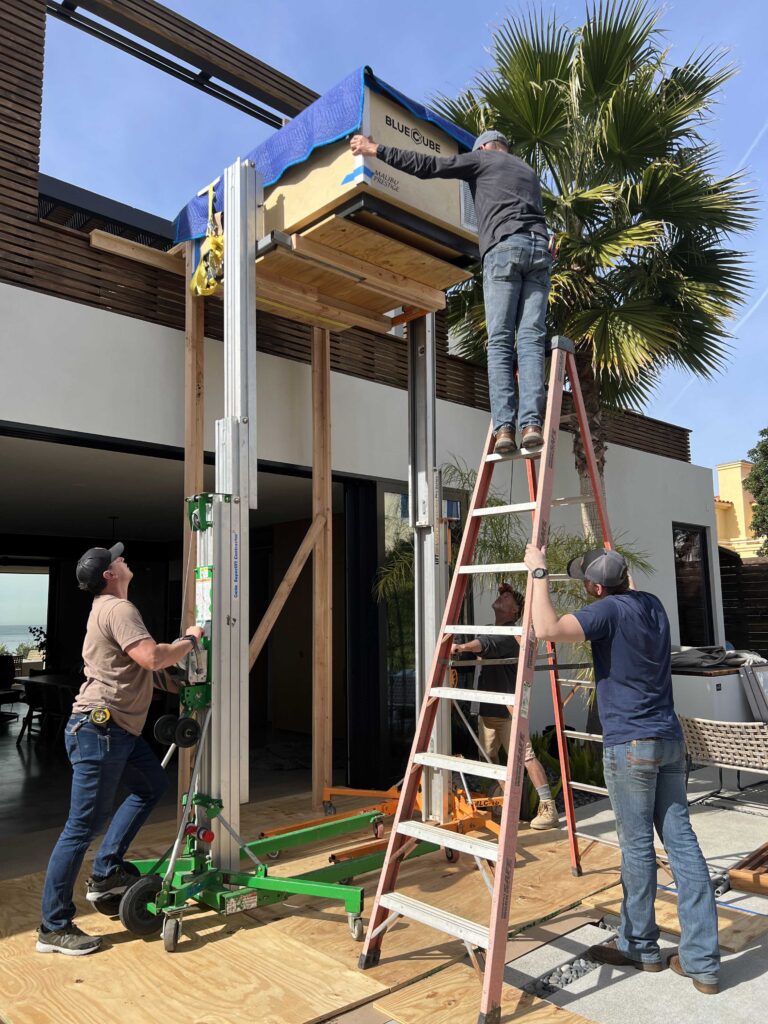
You do not need professional installation of your BlueCube cold plunge. BlueCubes come fully assembled, dropped off curbside in a palletized crate. Screw gun, four movers, and moving dollies are recommended. BlueCubes can fit through narrow doors and hallways by being tilted on their sides (28.5″ in height). They can also be tilted vertically if necessary for tight spaces and turns. After placing the cold plunge tub into position, do not turn on the unit for at least 2 hours (or however long it was tilted for) to allow the chilling motor to reset (just like a refrigerator).
Where is the best place to install my cold plunge (indoors vs. outdoors)?
BlueCubes can be installed indoors or outdoors. Our frames are coated with Line-X® (truck bed lining) and are weatherproof. A level surface with proper electrical access is recommended for indoor or outdoor installation.
Can I use the cold plunge outdoors in winter or hot climates?
Yes — BlueCubes are weatherproof and designed for indoor or outdoor use across climates. Below 20°F ambient temperature we recommend winterizing, and keeping a backup generator ready in freezing climates: if power cuts and circulation stops, plumbing can be damaged within minutes. Freeze damage is not covered by warranty, though it is repairable in the field. In hot climates, place the unit in the shade when possible — insulating spa covers are included.
What are the dimensions and weight of the tub (will it fit my space)?
Dimensions and weights vary by model and are listed in the spec sheets. C-series and M units are low-profile laydown tubs that can be tilted on their sides (28.5 inches) to pass through interior doors and narrow hallways; the upright D1 and D2 tubs are 33 inches in height for moving through doorways. Reference the spec sheets or contact sales@bluecubebaths.com for placement guidance.
Is the cold plunge noisy when it’s running?
Less than 60 decibels. Our Japanese magnetic-drive pumps are near silent, and the chiller fan runs only while chilling — it turns off once the water reaches temperature.
Can I customize the tub’s exterior or features (color, panels, etc.)?
Yes — your BlueCube can be tailored to match your space and style: standard and custom colors, custom engraved logos, stainless steel decals, wooden deck options (black walnut or mahogany), on-site cladding prep, powder-coated screens and tubs, and alternative tub materials (carbon fiber, HempCarbon, gel-coated fiber). Custom-size tubs are available through our custom BlueCube process.
What kind of warranty comes with BlueCube cold plunge tubs?
BlueCube cold plunges come with a 3 year full coverage warranty (parts and labor) for residential use, and a 1 year full coverage warranty for commercial use. This covers components, plumbing, electrical, and labor. 15 year warranty on the stainless steel tub and frame (Line-X® finish). 10 year warranty on aluminum (D1 and D2), carbon fiber, HempCarbon, and gel-coated fiber tubs. 5 year extended warranties (lifetime protection program) are available for homes and businesses that follow maintenance schedules and sign up for our subscription plan.
What happens if a part breaks – are replacement parts available?
All BlueCube components are replaceable. If you are in warranty, we ship out the necessary parts and send a technician to get you cold plunging as soon as possible. If you are out of warranty, we’ve still got your back and can arrange the parts and help you need.
How much does shipping/delivery cost, and do you ship internationally?
Curbside shipping is included in MSRP for the continental US (48 states). Shipping to Hawaii, Alaska, U.S. territories and internationally is a pass-through expense to the customer.
How long is the lead time to build and ship a cold plunge?
BlueCube is booked out in advance. Lead times on standard builds are currently estimated at 6-8 weeks (8-10 weeks for M units), subject to change based on demand — our cold plunges are handcrafted and built in America, and we run limited batches on a monthly basis. Shipping adds 1-2 weeks depending on where you live. Call sales to book your BlueCube build.
Do you offer a satisfaction guarantee or trial period for returns?
Standard models include a 30-day money-back guarantee, less a 25% restocking fee. Custom-built units (logo engravings, custom colors, custom configurations) are non-refundable.
Is financing available to purchase a cold plunge?
Yes — multiple financing options are available for home and business clients: Affirm (through the shopping cart), HFS (residential only), Brickhouse Capital (commercial equipment financing), and Avvance (residential and commercial).
How can I buy maintenance supplies or replacement filters?
You can buy maintenance supplies and filters directly from us, or through Amazon, Spa Depot, and other online retailers. If you sign up for our extended warranty, supplies are automatically shipped to your home or business.
How can I contact customer support if I need help or service?
Call 541-393-9149 or email service@bluecubebaths.com. Our customer success specialists will arrange a live video call with our U.S.-based technicians to diagnose your BlueCube and outline next steps.
Explore BlueCube
Ready to go deeper? Configure the C2 stainless cold plunge tub — our signature sit-in — or the stand-up D1 cold plunge tub. Dial in your routine with our cold plunge temperature guide, or learn how to buy a cold plunge with HSA/FSA funds. Outfitting a gym, spa, or recovery studio? See our commercial cold plunges. Want something one-of-a-kind? Explore custom cold plunge tubs and pools.